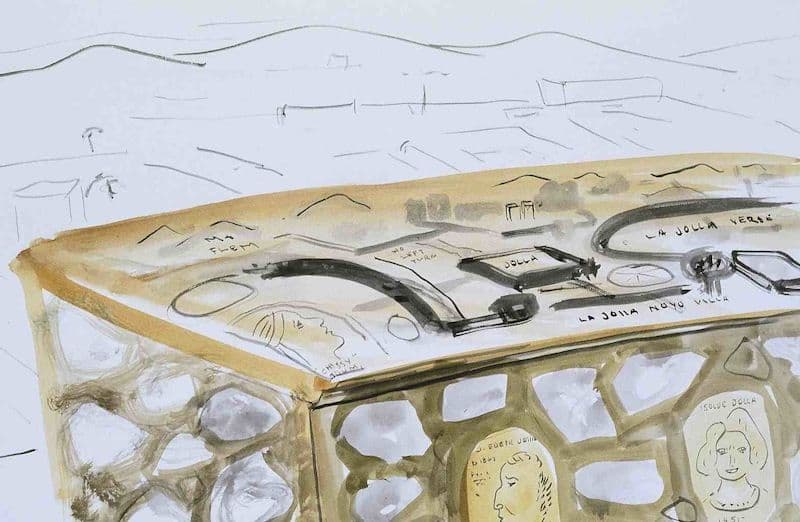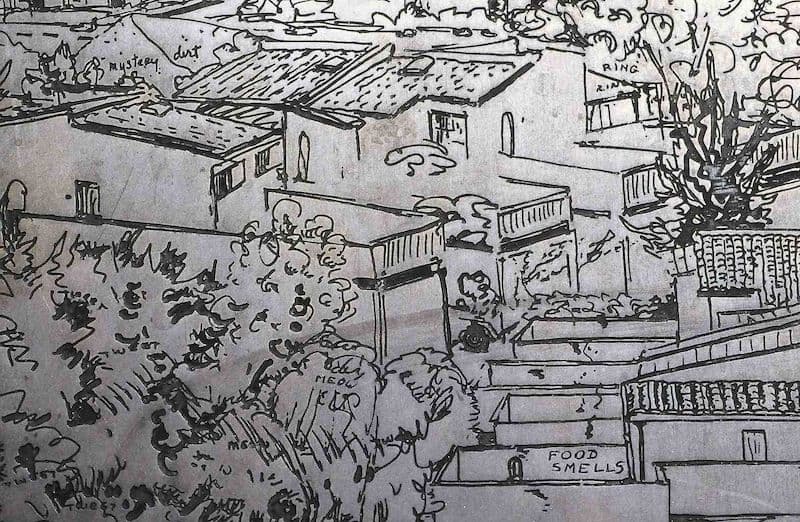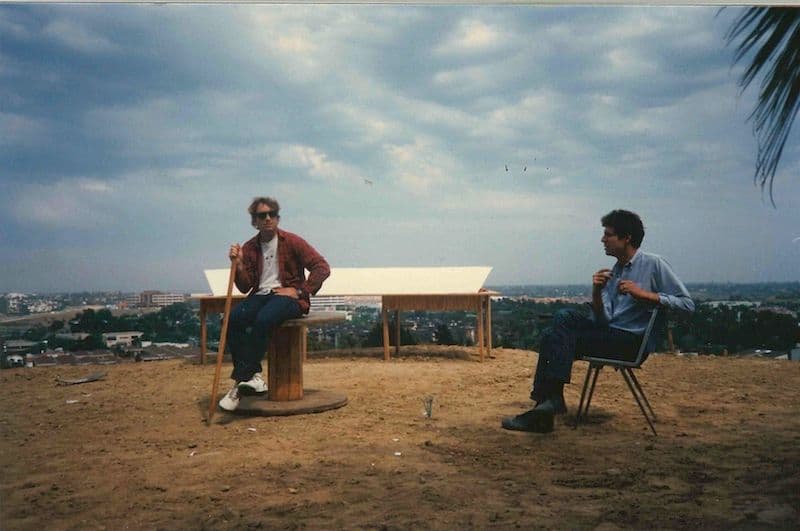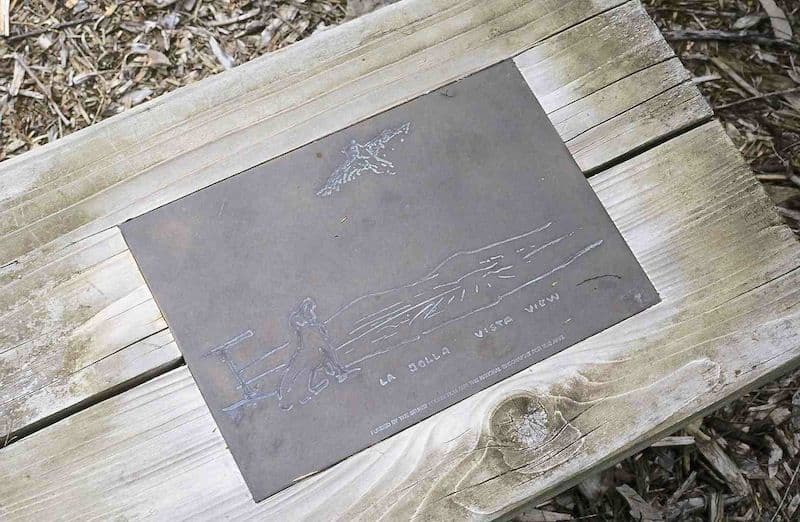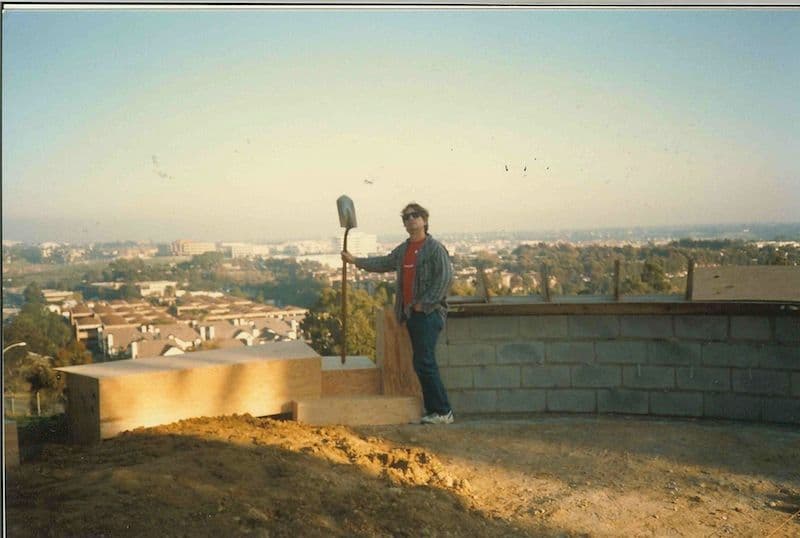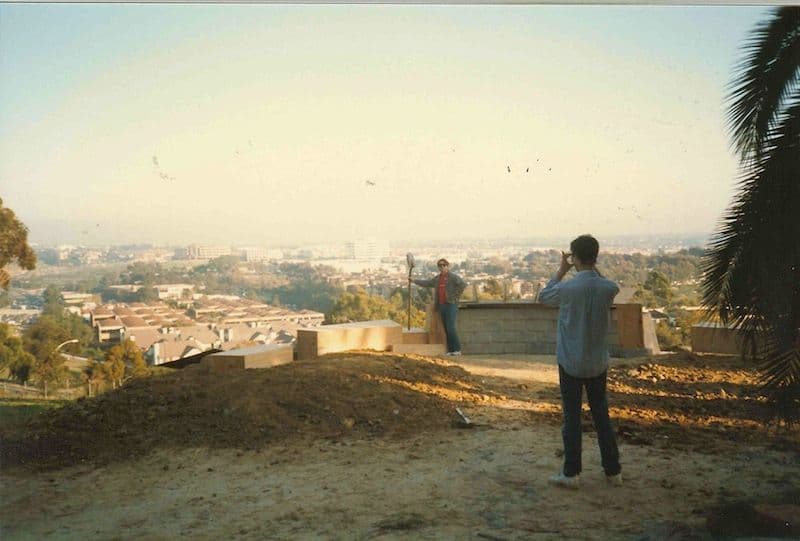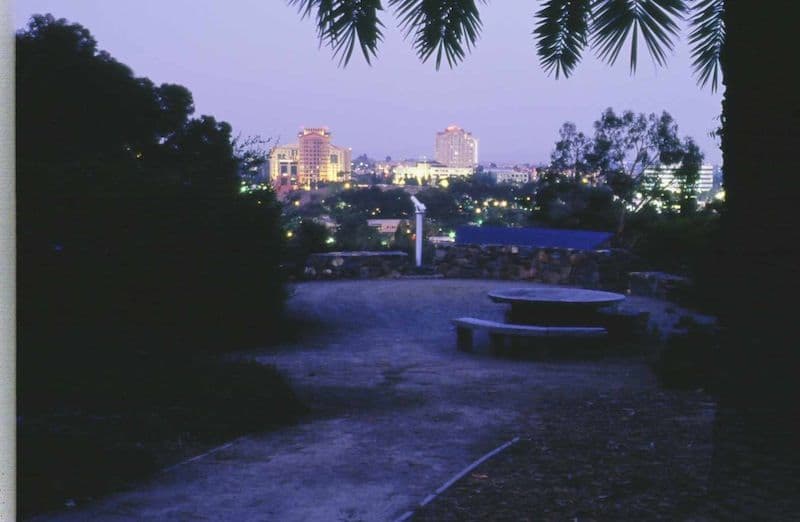
For the Stuart Collection Wegman created his first major outdoor permanent sculpture: he installed a scenic — or nonscenic — overlook at one edge of the campus, near the location of the university's theater and dance complex. The site commands a view not of the Pacific Ocean, visible from the other side of the university, or some other pristine wilderness view, but of La Jolla's suburban sprawl. The centerpiece of La Jolla Vista View is a long bronze map; it transposes from Wegman's idiosyncratic drawing the supposed "points of interest" discernible from the overlook. These include housing developments, construction sites, and the footbridge connecting UCSD with the shopping center adjacent to the campus. Wegman's overlook, complete with a telescope, drinking fountain, and picnic table set under a palm tree, makes a simple cartoonlike connection between Southern California's still-picturesque natural scenery and its booming economic growth/development which places an ever-increasing strain on the region's environment.
Wegman's La Jolla Vista View uses the language of fantasy and humor to convey a serious message. Many of the sites Wegman has marked on his bronze map are temporary — building construction, birds in flight, or a group of people walking their dogs. These immediately "outdated" points of interest cause viewers to contemplate the rapidity of change in everyday life, and the constant revision of history which results. New buildings constructed since the drawing was done in 1987 become markers of time as well as place. By defamiliarizing the ordinary world of suburban life — through its transformation into an exotic or scenic overlook — Wegman encourages the university community to view its surroundings with fresh and newly critical eyes.
Share