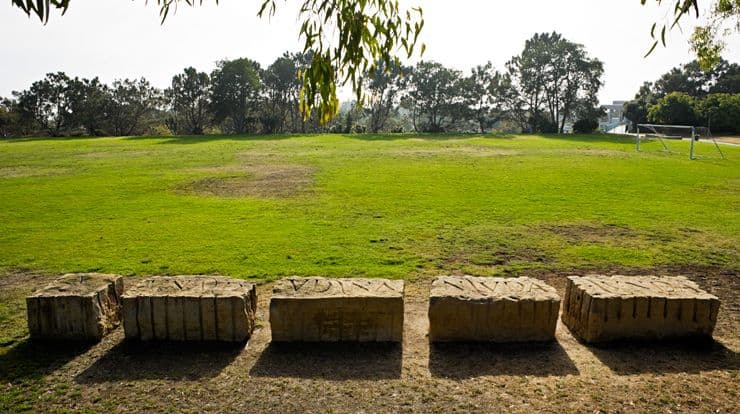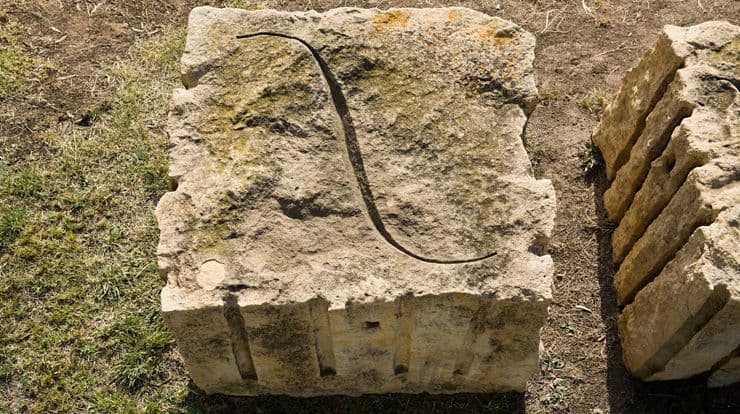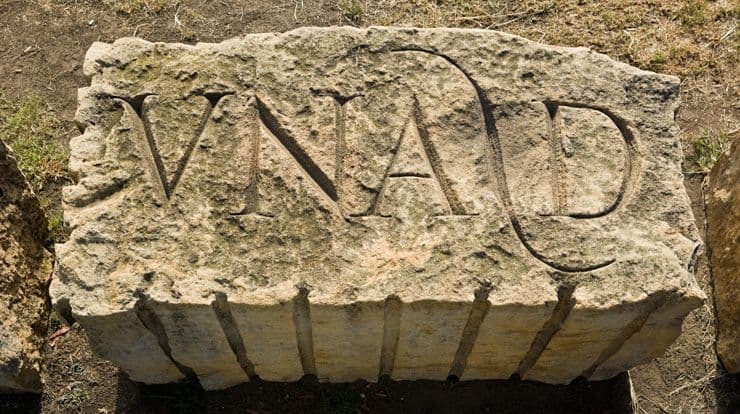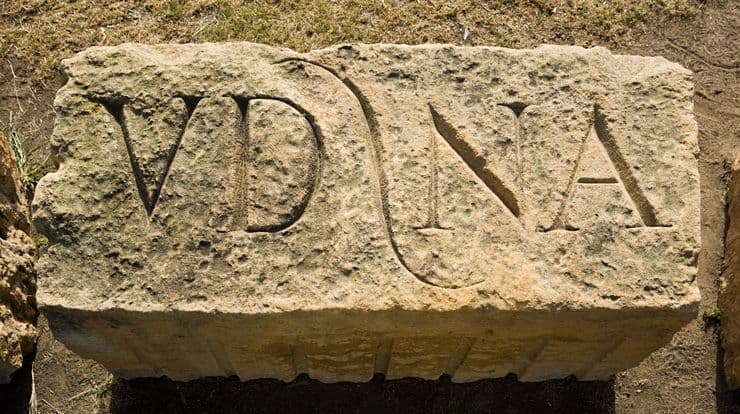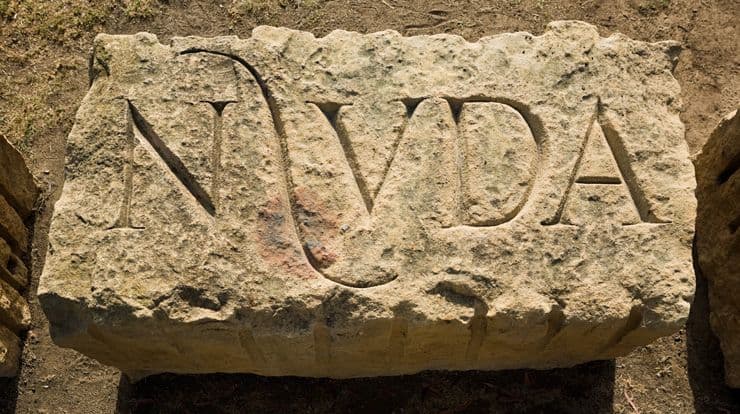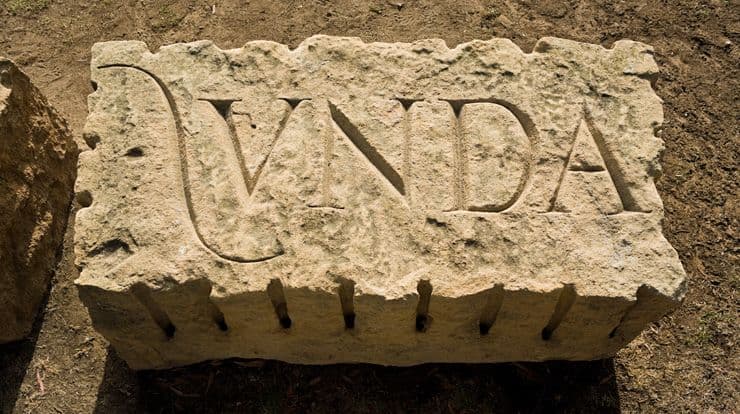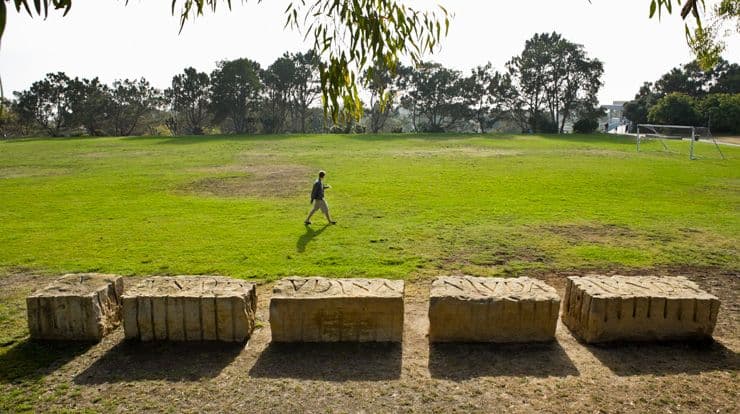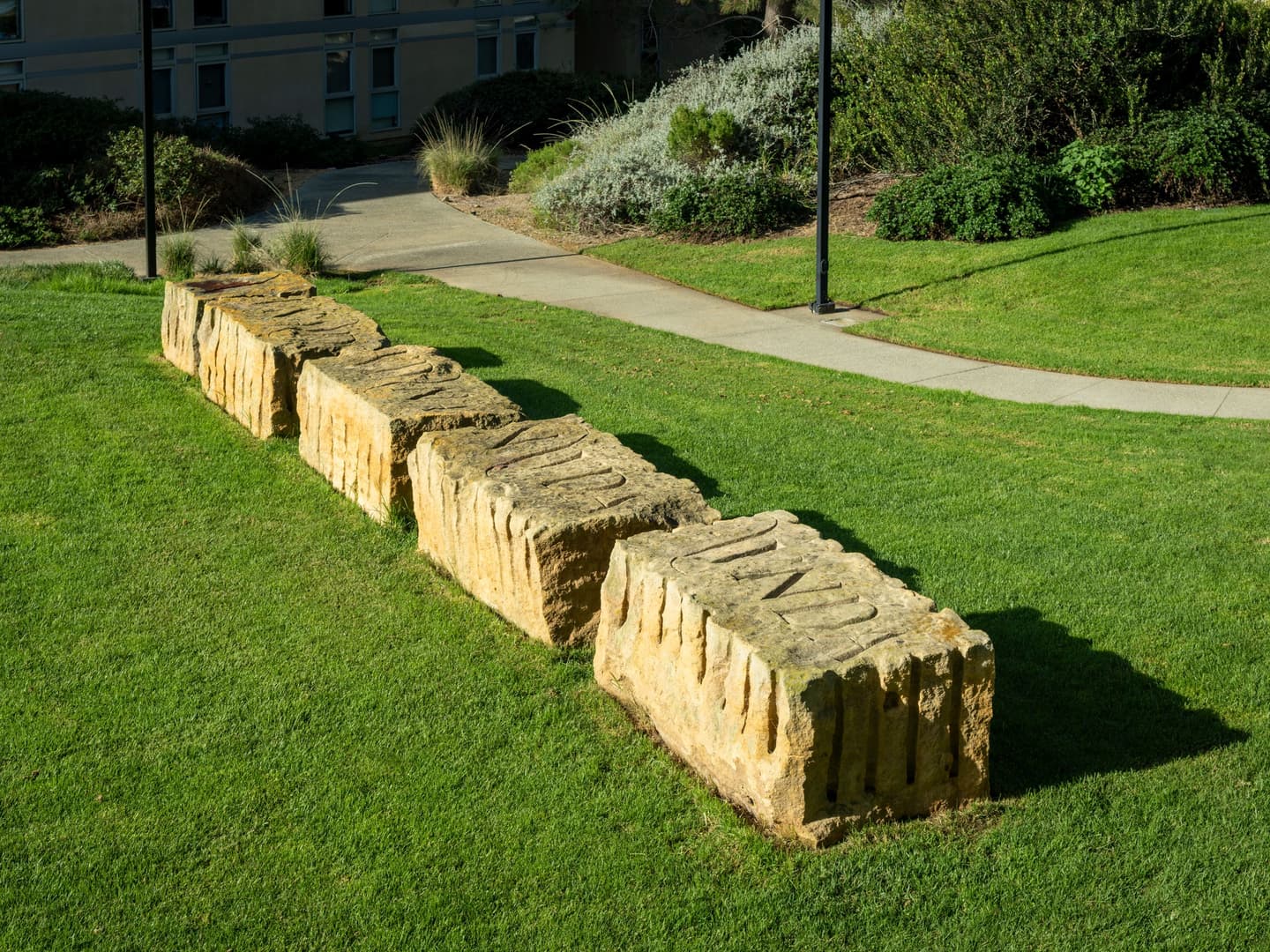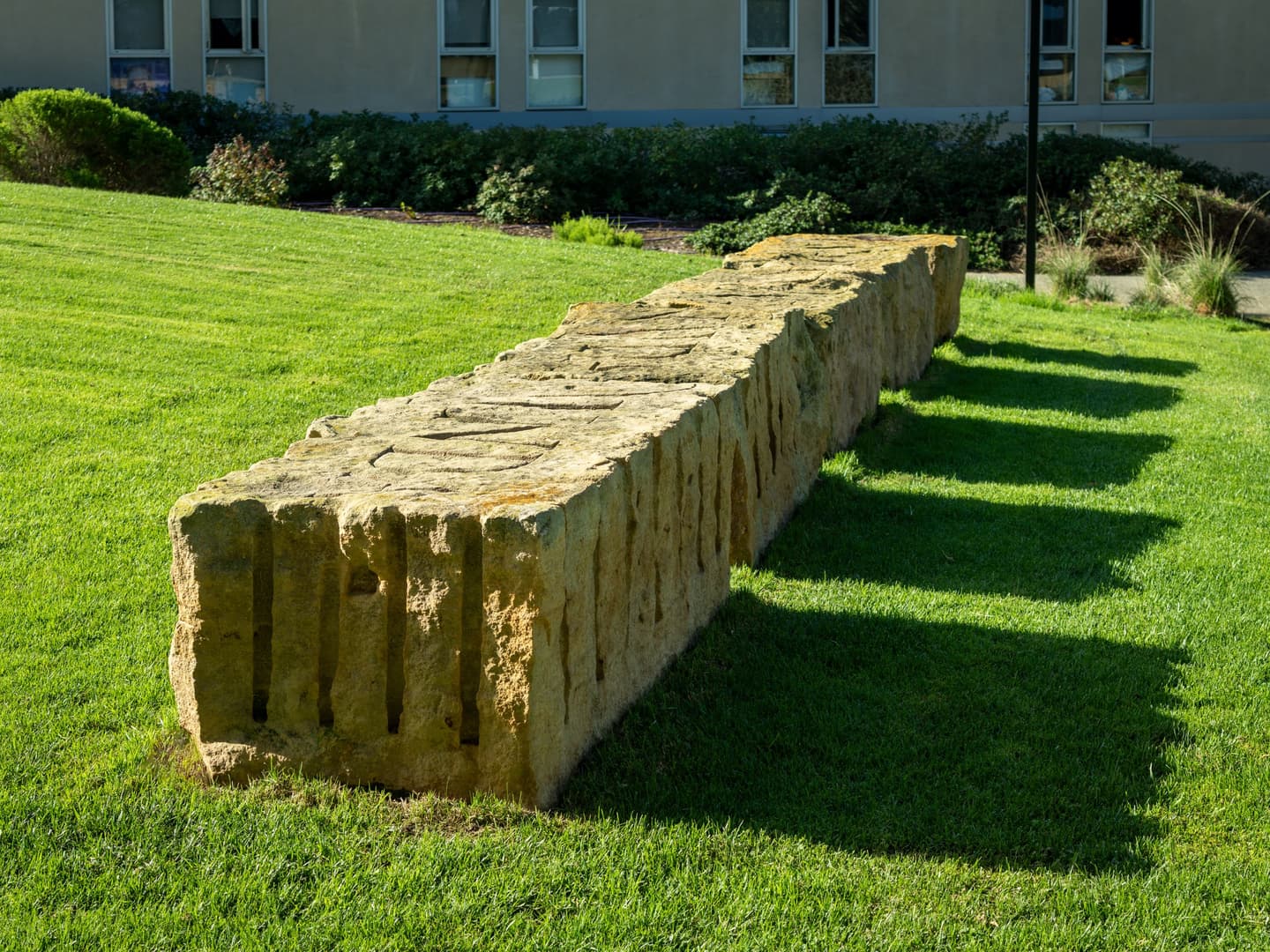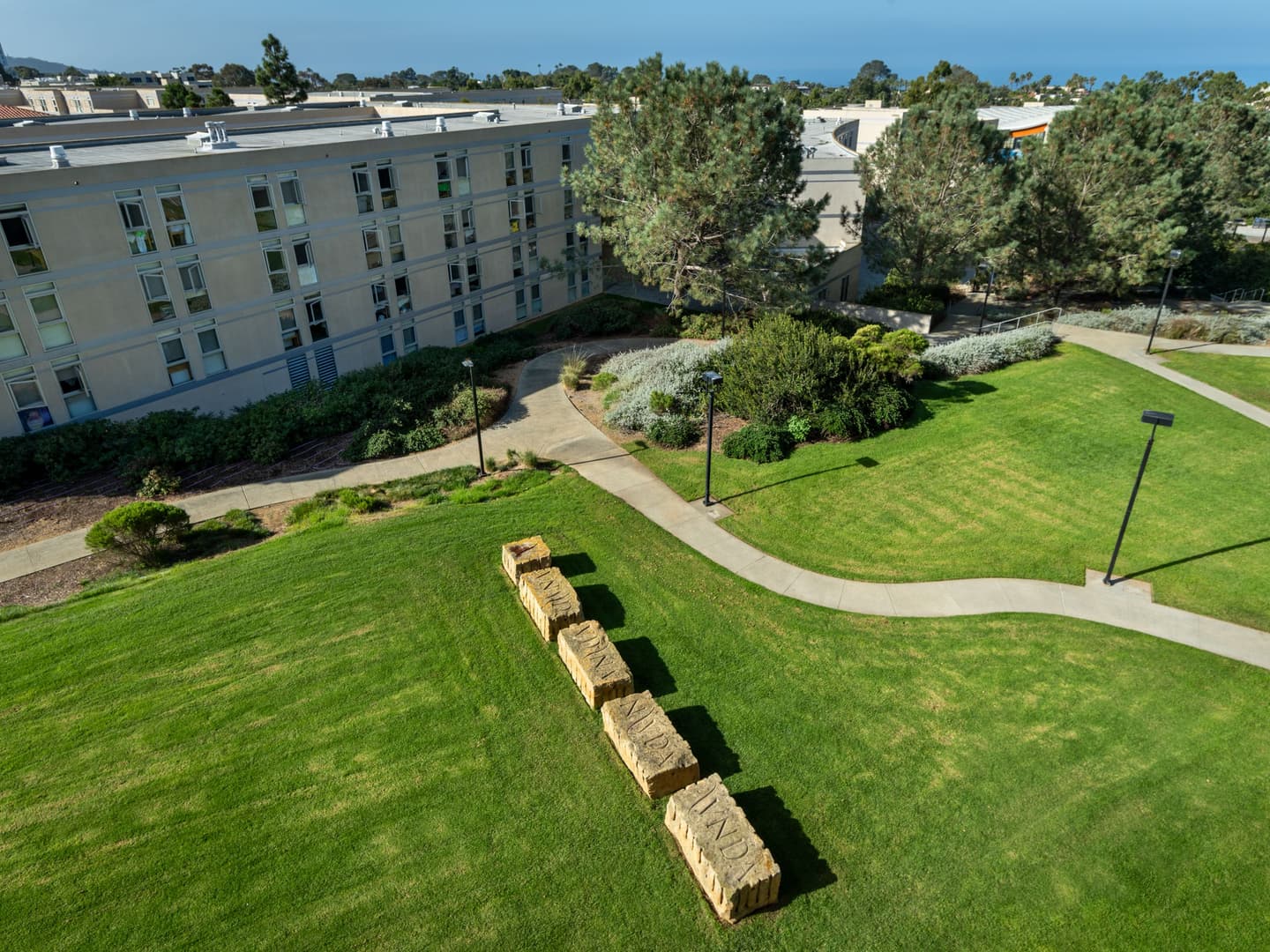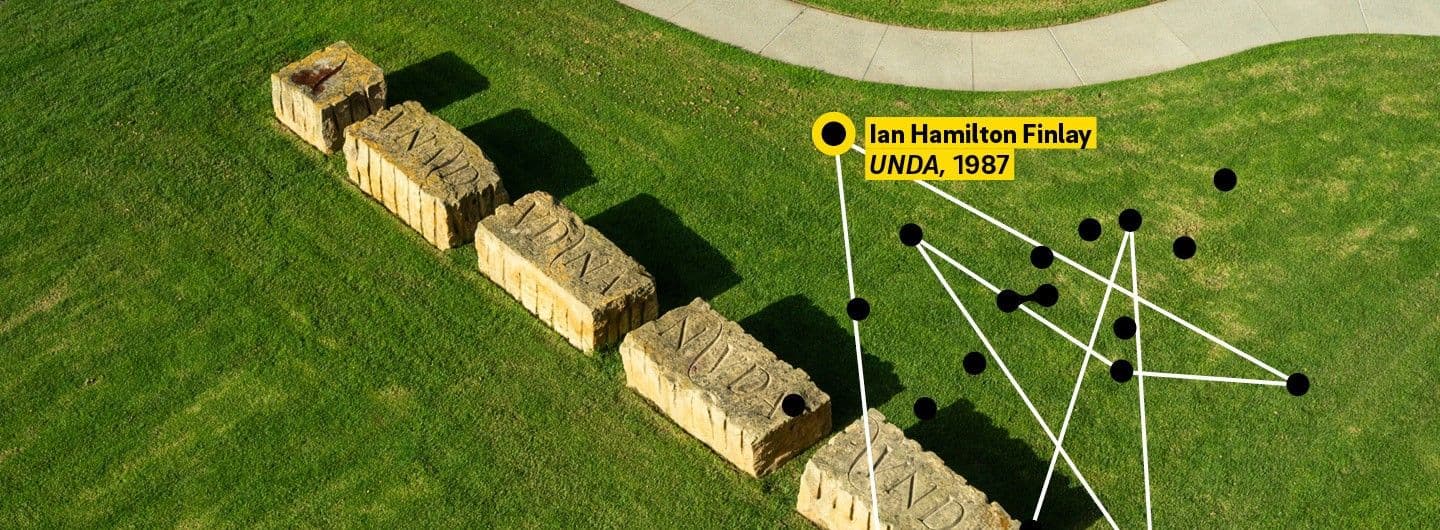
Although he is now better known as a sculptor than as a writer, the power of language remains central to Finlay's work. For UCSD he created a one-word poem, originally installed at one edge of the north playing field between the Humanities Building and the student apartments of Thurgood Marshall College. The sculpture is now installed in the triangular lawn south of the Rady School of Management and north of Eleanor Roosevelt College, with a view toward the Pacific Ocean. *UNDA* consists of five stone blocks into which are carved, in various sequences, the letters U, N, D, A, and an S-like mark which is the editor's notation for "transpose these letters." The letters on each block in the sequence carry out the transpositions indicated by this curved mark so that regardless of the order of the letters, each block ultimately spells out *UNDA*. In the course of the multi-part sculpture, the wave sign rolls through *UNDA*, the Latin word for wave, while the tops of the stones are aligned with the distant horizon of ocean. A literary cycle is identified with the cycle of the natural wave, an association that the artist relates to the velocity and flow of language.
*UNDA* was completed in 1987 and was Finlay's first permanent outdoor work in the United States. Sue Finlay and Nicolas Sloan collaborated with him on the project. The stones are rough-cut guiting, or English limestone, which was quarried near the Cotswolds and selected for its similarity to the color of the cliffs near the campus. A few eucalyptus and pine trees were planted on either side of the sculpture to make a connection with the distant trees, to frame the view, and to create the sense of a special enclave.
Share